About Woodland
A small town on U.S. 258 in eastern Northampton County, chartered in 1883 and shaped by Quaker settlers, the railroad and the farms around it.
- Incorporated
- March 9, 1883
- County
- Northampton
- Population, 2020 Census
- 557
- Land area
- 1.25 square miles
From Harrell's Cross Roads to Woodland
Around 1800 the crossroads here was known as Harrell's Cross Roads. The North Carolina Gazetteer dates the settlement of Woodland to about 1835 and credits the name to the Wood family, early Quaker settlers.
The General Assembly chartered the town on March 9, 1883. The charter drew the town limits as a half-mile circle around the house formerly occupied by A.J. Harrell and named Paul Harrell the first mayor.
The railroad, caskets and crops
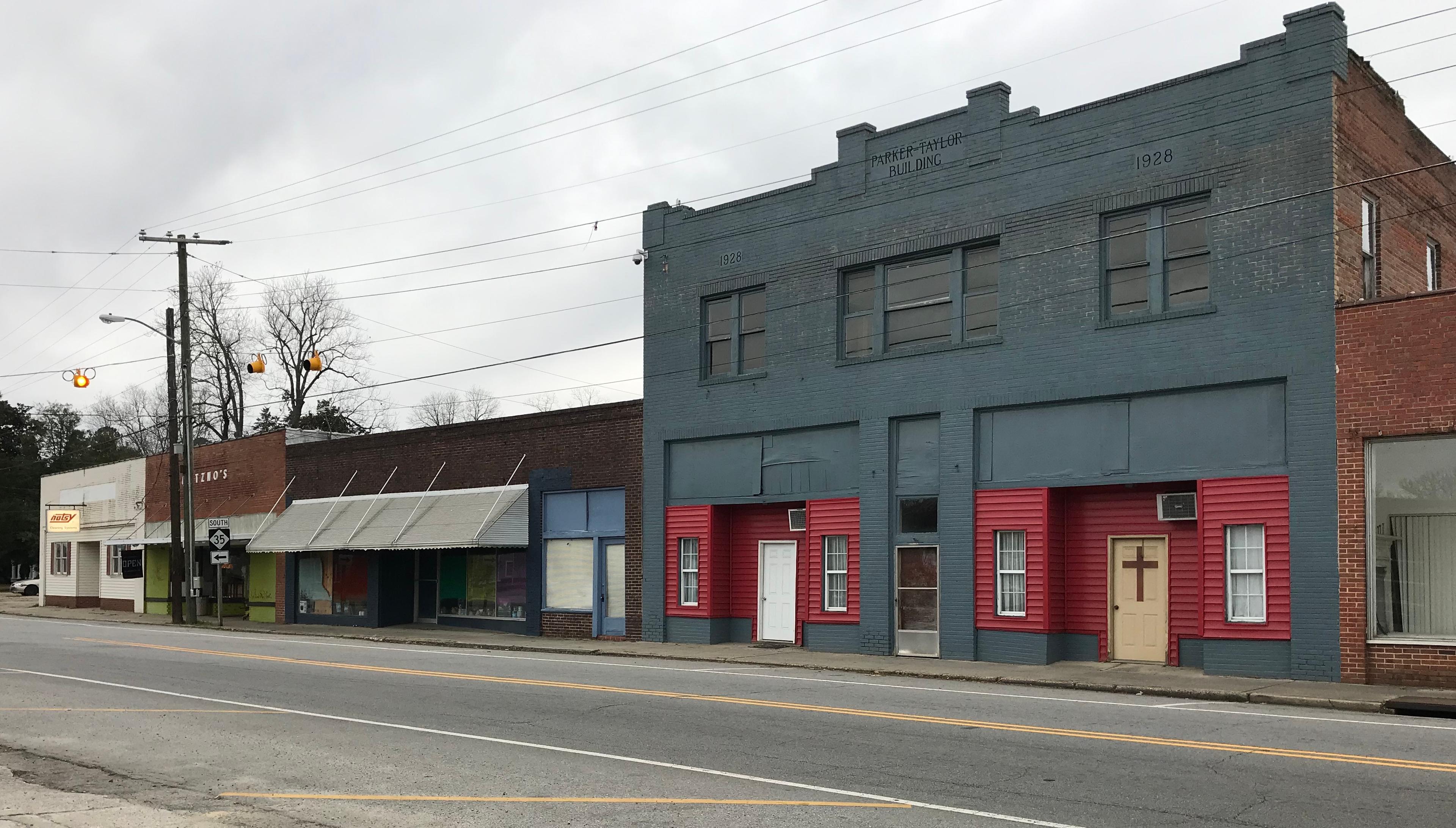
The Seaboard Air Line system reached Woodland in 1887 and 1888, on the line listed as the Roanoke and Tar River Railroad. Rail access helped Woodland grow into a manufacturing and banking center.
Farming, timber and sawmills supported the early town. Wheat, cotton and corn were the staple crops, and in the 1880s Quaker farmer James Outland of Rich Square introduced commercial peanut growing to the county. Peanuts and cotton are still grown across Northampton County today.
The Woodland Manufacturing Company, organized in 1895, made caskets from local lumber. Two more casket makers followed before World War II. Talon Zipper Company came in 1953, and Daber Shirt Company opened in 1972.
Quakers and Cedar Grove
Friends began meeting in homes in this area around 1753, and the Rich Square Monthly Meeting organized in 1760 south of present-day Woodland. Cedar Grove Meeting was established in 1868.
In 1904 Conservative Friends organized a new Yearly Meeting at Cedar Grove. When the Rich Square meeting closed in December 1936, its congregation moved to Cedar Grove. A state historical marker stands on Main Street.
Places of worship
- Cedar Grove Meeting House303 W. Main St.
- Jerusalem Baptist Church205 Myrtle St.
- Kingdom Hall of Jehovah's Witnesses644 E. Main St.
- New Jerusalem Church of Christ101 E. Main St.
- Woodland Baptist Church116 W. Main St.
- Woodland Methodist Church302 E. Main St.

Schools
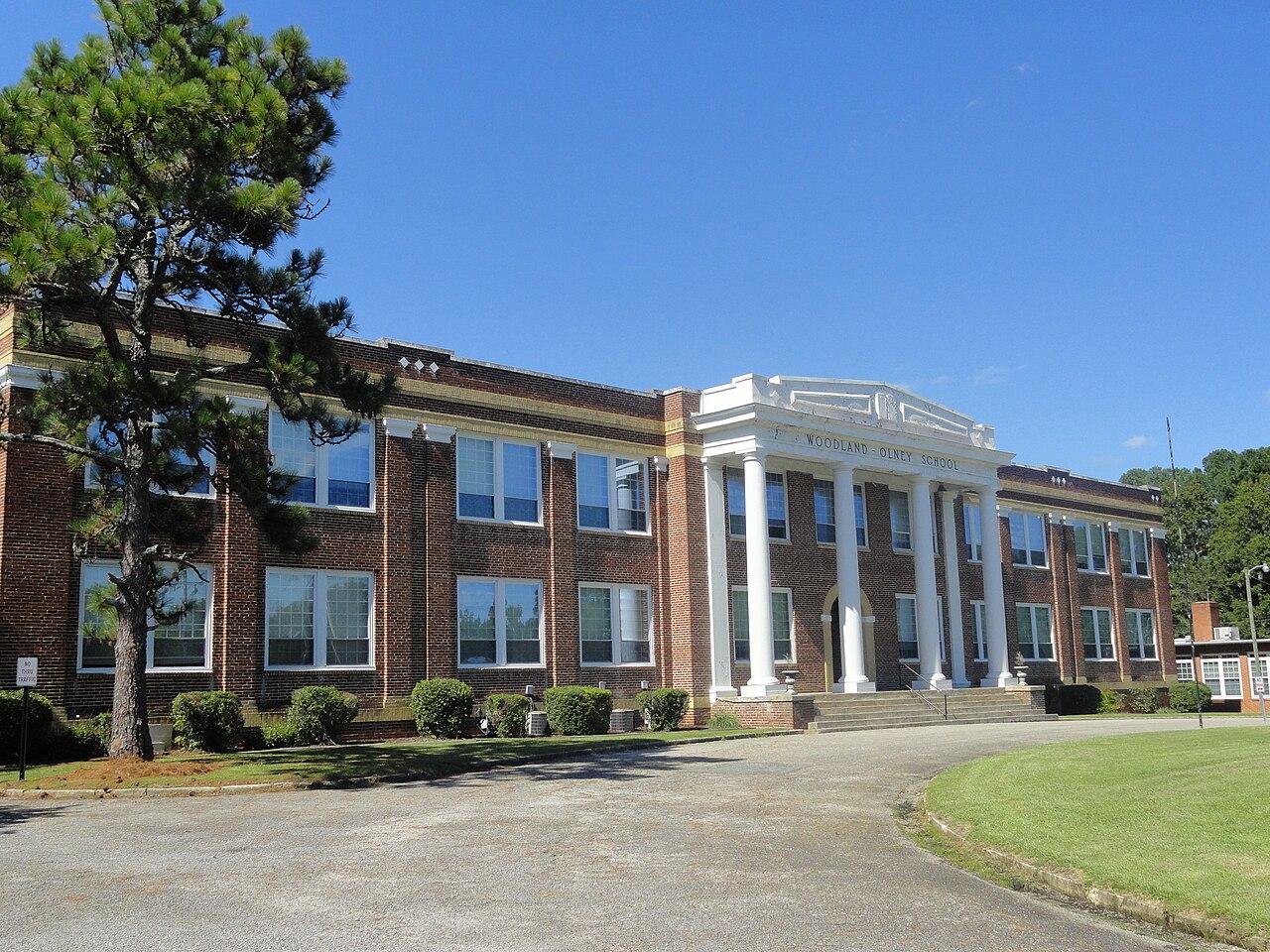
In 1916, during the era of segregated schools, the white school districts of Woodland and Olney were consolidated. The brick Woodland-Olney School, a Classical Revival building designed by Eric Flanagan, opened in April 1929 and taught kindergarten through 12th grade. It was listed on the National Register of Historic Places on October 8, 1997.
Since 1998 the building has been Woodland Olney School Apartments, 30 apartments for seniors. It is a private residence.
Black students in Woodland attended the Woodland Rosenwald School, which stood at 300 Myrtle Street. The building is no longer standing.